Advanced Laser Birthmark Treatment by Dr Peter Kim
Over 20 Years Experience | More Than 10,000 Laser Treatments Performed
All consultations and treatments are personally performed by Dr Peter Kim.
Cosmetic Laser Sydney is a doctor-operated cosmetic and dermatological laser clinic specialising in the treatment of pigmented birthmarks and complex pigmentation disorders.
Over the past 20 years, Dr Peter Kim has treated a wide range of birthmarks including:
• Nevus of Ota
• Café-au-lait patches
• Congenital melanocytic naevi
• Acquired bilateral nevus of Ota-like macules (ABNOM / Hori’s Naevus)
• Pigmented birthmarks
• Selected vascular birthmarks
Many birthmarks can be significantly improved with laser treatment, although multiple treatment sessions are often required.
📞 Call (02) 9411 4880 or 0433 284 880 to arrange a consultation.
Why Choose Cosmetic Laser Sydney?
✓ Over 20 years laser experience
✓ More than 10,000 laser procedures performed
✓ All treatments personally performed by Dr Peter Kim
✓ Extensive experience treating Asian and ethnic skin
✓ Experience with difficult pigmentation disorders
✓ Advanced medical-grade laser technology
✓ Clinics in Chatswood, Ryde and Cabramatta
What Is A Birthmark?
A birthmark is a coloured area of skin that is present at birth or develops during early childhood.
Birthmarks vary considerably in:
• Colour
• Depth
• Size
• Location
• Response to treatment
Some birthmarks involve superficial pigment close to the surface of the skin, while others involve pigment cells located deep within the dermis.
The depth of the pigment is one of the most important factors affecting treatment difficulty and the number of laser sessions required.
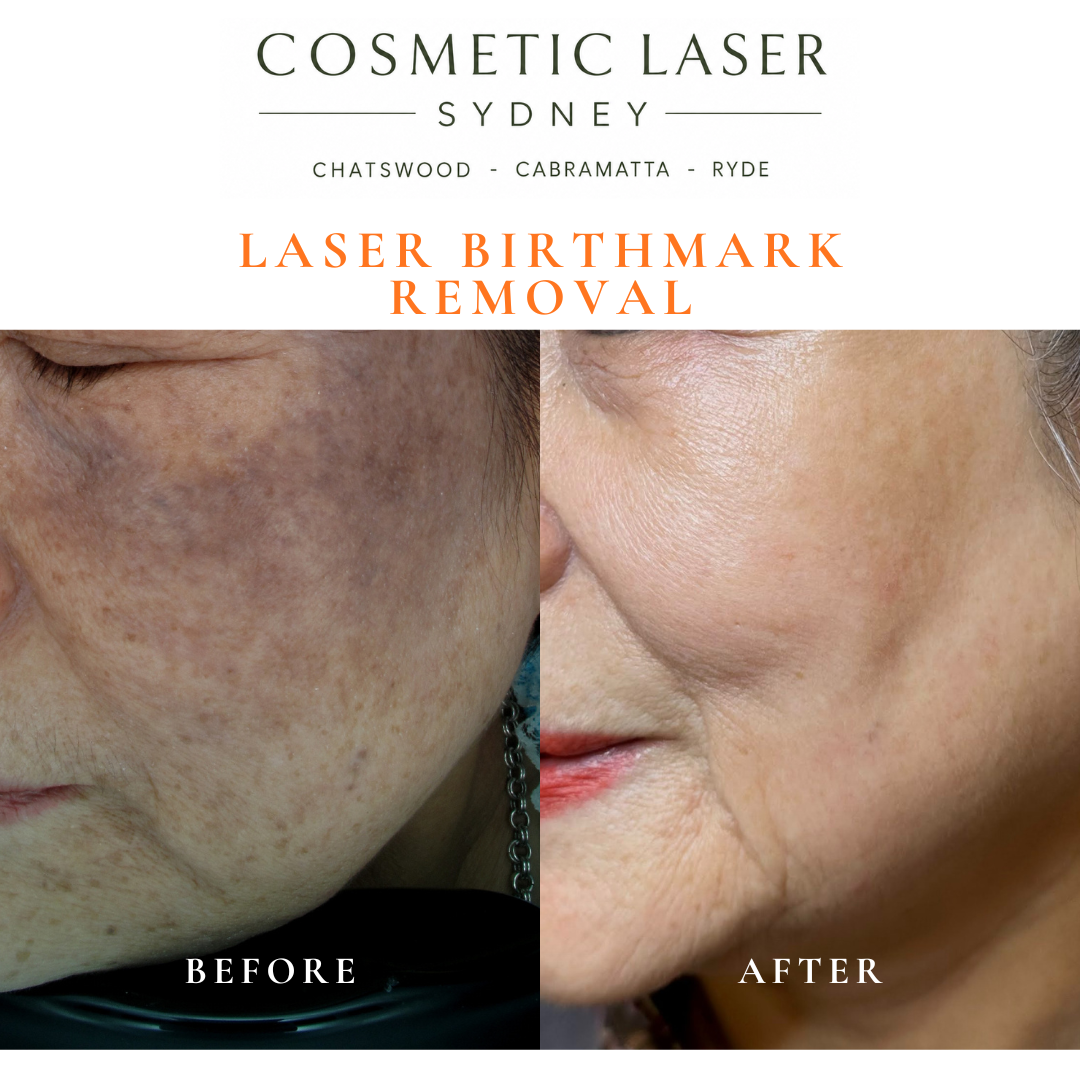
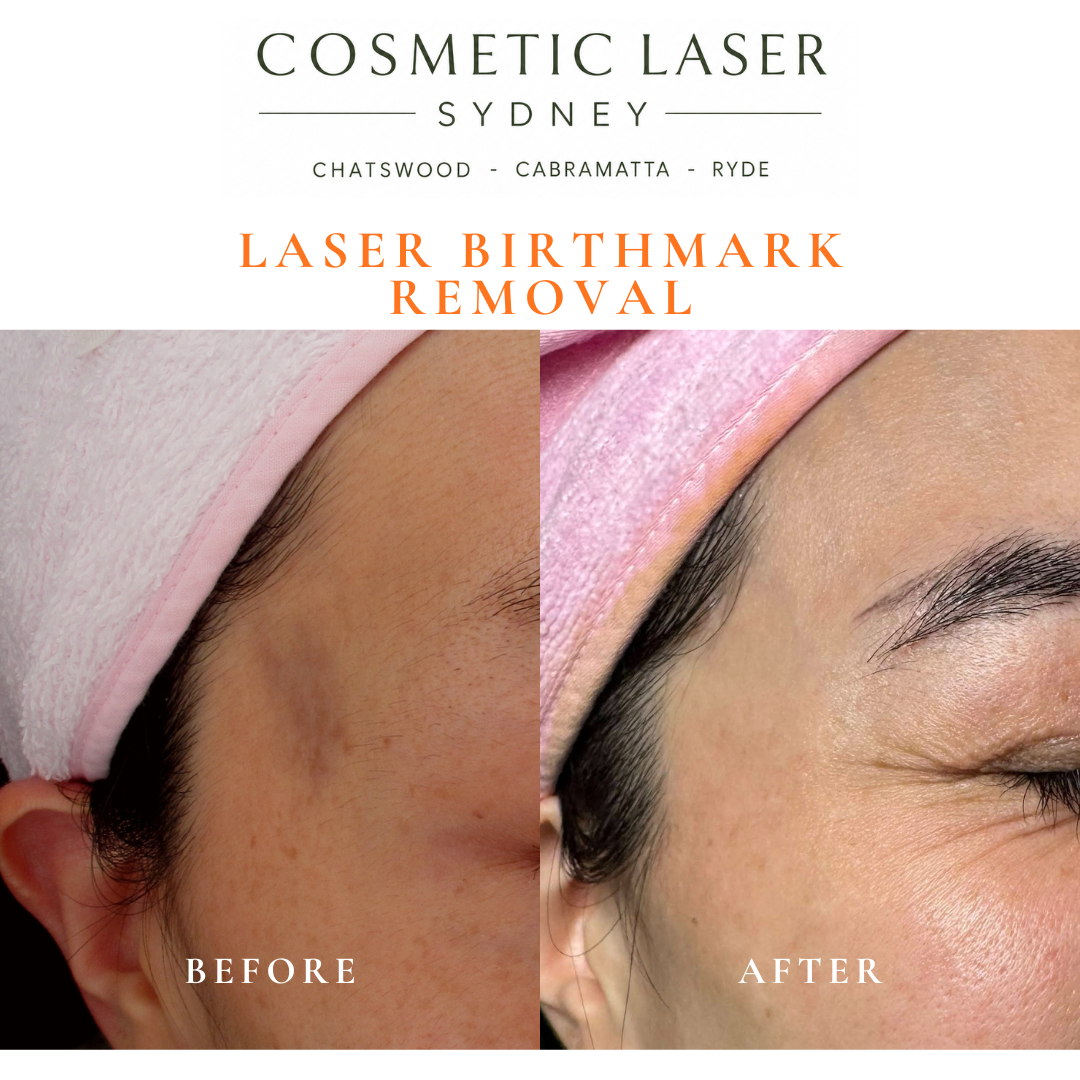
Real Patient Results
Over the past 20 years, Dr Peter Kim has treated many patients with challenging birthmarks and pigmentation disorders.
Below are examples of actual patients treated at Cosmetic Laser Sydney.
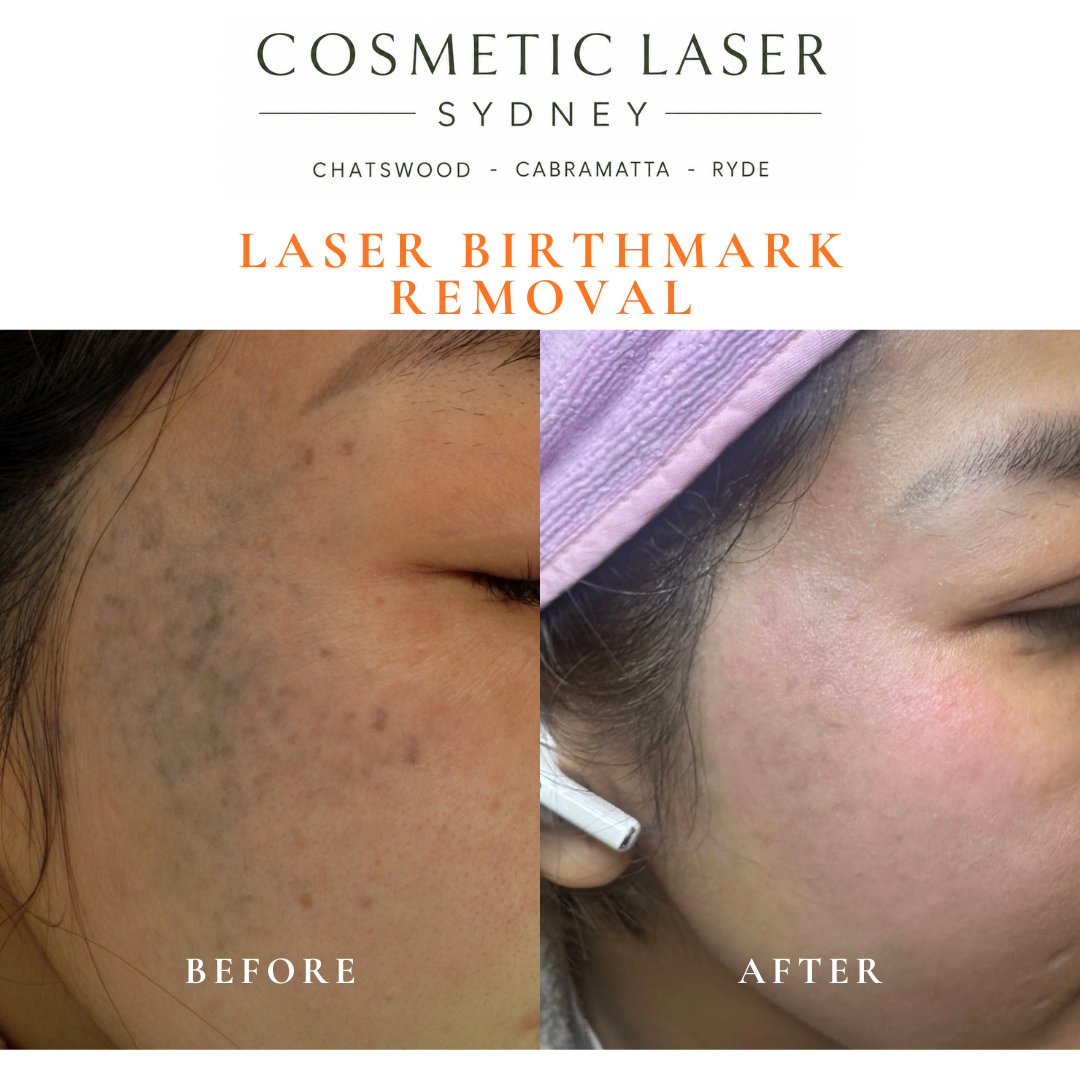
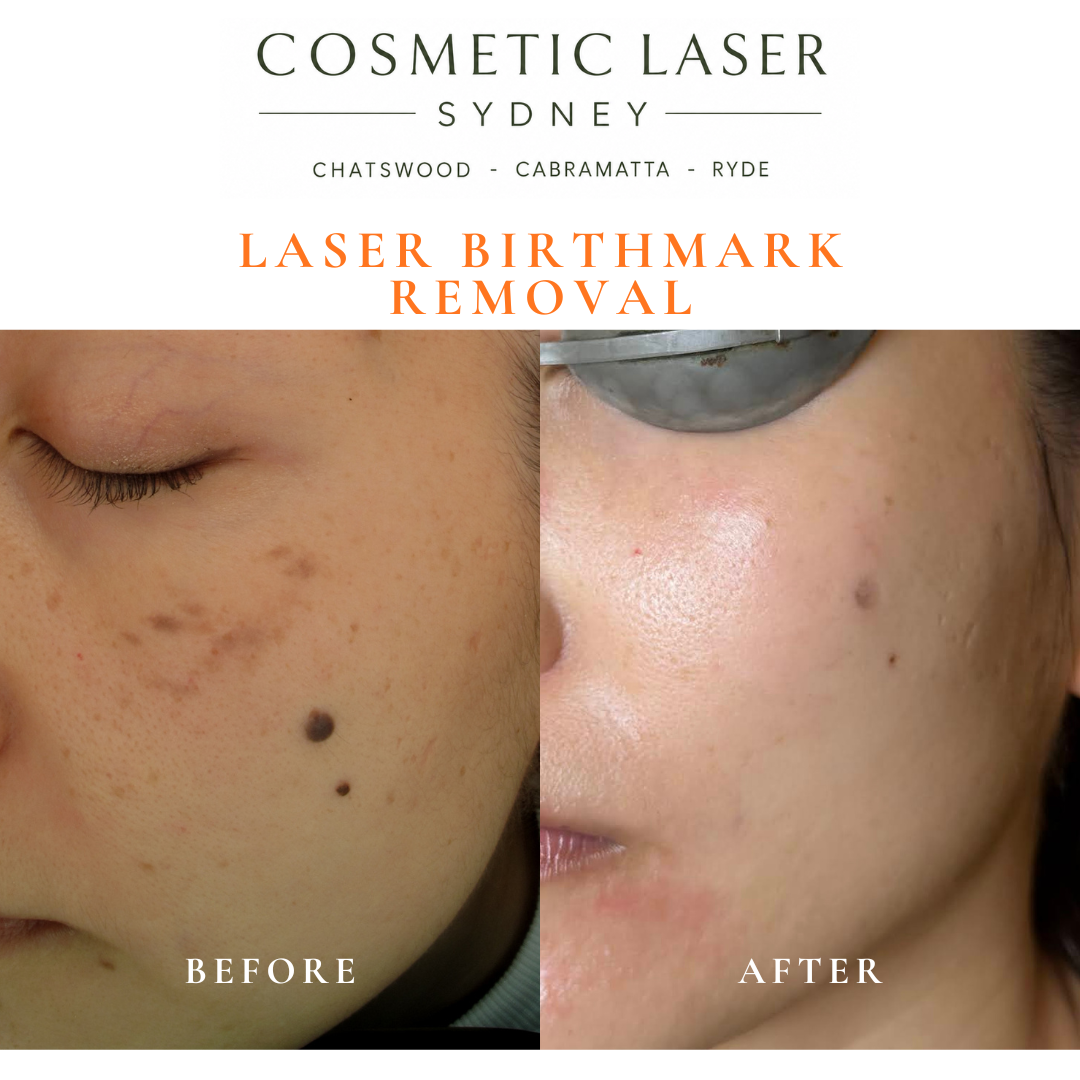
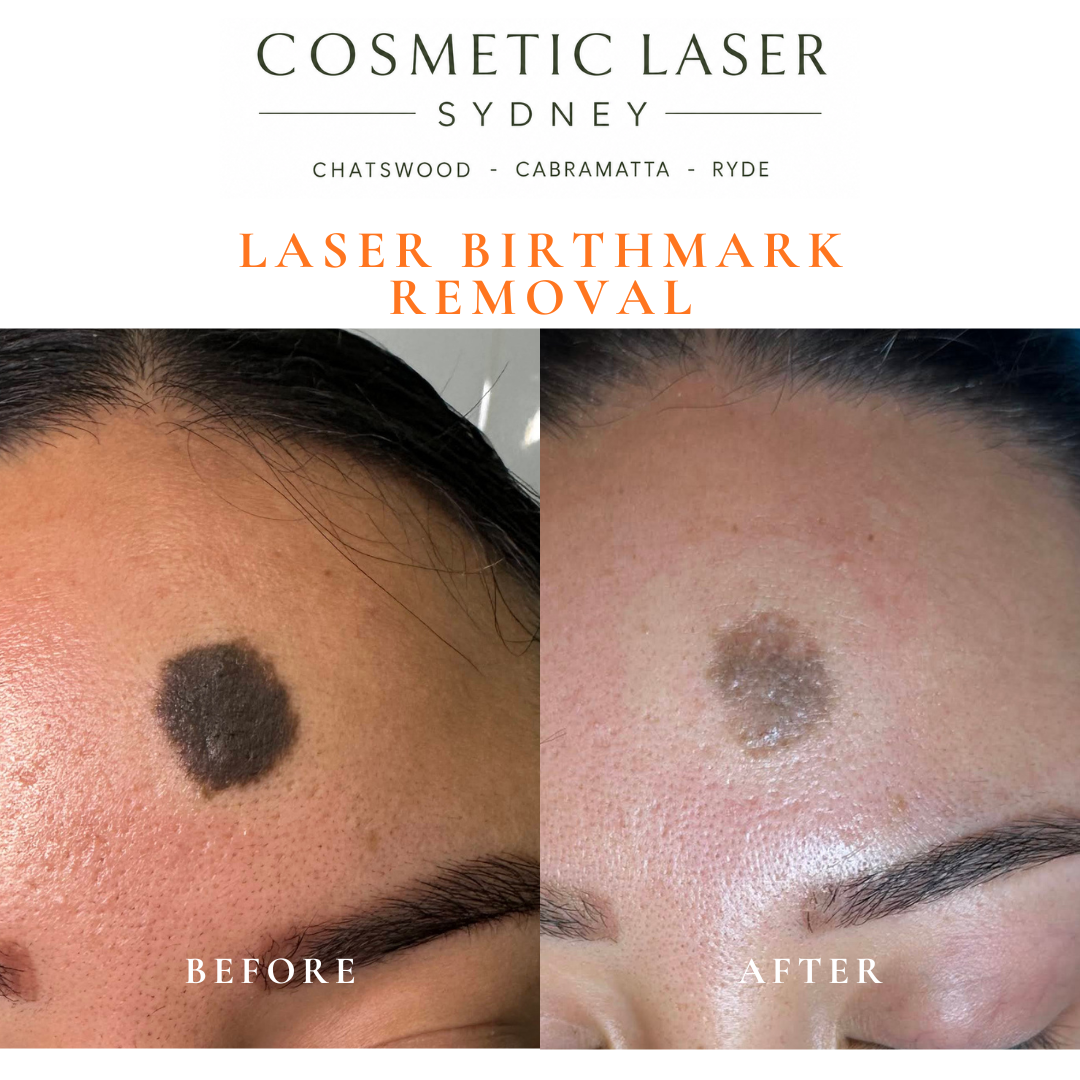
The patient wished to lighten the birthmark before her wedding to improve cosmetic appearance and make it easier to conceal with makeup.
She underwent 6 laser treatment sessions, which resulted in significant lightening of the pigmentation. Although further improvement is still possible and she will likely require additional sessions for a more optimal result, the patient was very happy with the current outcome. After treatment, the remaining pigmentation could be much more effectively covered with makeup, which was not previously possible.
Over 20 Years Experience
More Than 10,000 Laser Treatments Performed
All Treatments Personally Performed By Dr Peter Kim
Types Of Birthmarks We Commonly Treat
Nevus of Ota
Nevus of Ota is a congenital birthmark caused by pigment cells located deep within the skin.
It often appears as blue-grey or brown pigmentation involving the face and around the eye.
Because the pigment is located deep within the dermis, treatment usually requires multiple laser sessions.
Café-au-Lait Patches
Café-au-lait patches are light brown birthmarks that often respond better to treatment because the pigment is located more superficially within the skin.
Several treatment sessions are usually required.
ABNOM (Hori’s Naevus)
ABNOM is a common pigmentation disorder seen particularly in Asian patients.
Although not present at birth, it behaves similarly to Nevus of Ota and often requires multiple treatment sessions.
Congenital Melanocytic Naevi
These pigmented birthmarks are present at birth and vary considerably in size and depth.
Laser treatment may help lighten the pigmentation and improve cosmetic appearance, particularly when surgical removal is not practical.
Why Experience Matters
Birthmark treatment is highly operator-dependent.
Successful treatment requires:
• Accurate diagnosis
• Understanding the depth of pigmentation
• Appropriate laser selection
• Correct treatment settings
• Experience managing pigmentation complications
Different birthmarks respond very differently to treatment.
Some lesions may improve after only a few treatments, while others require long-term staged treatment over many months.
Dr Peter Kim has over 20 years of experience treating both superficial and deep pigmentation disorders.
Birthmark Treatment In Asian & Ethnic Skin
Asian and ethnic skin types often contain higher levels of melanin and may be more prone to pigmentation changes following laser treatment.
Many of the birthmarks we treat, including Nevus of Ota and ABNOM, are particularly common in Asian patients.
Dr Peter Kim has extensive experience treating Asian and ethnic skin and carefully adjusts treatment settings according to skin type and lesion characteristics.
How Many Treatments Will I Need?
The number of treatments depends on:
• The type of birthmark
• The depth of pigmentation
• The size of the lesion
• Skin type
• Individual response to treatment
As a general guide:
• Café-au-lait patches often require 3–8 sessions
• ABNOM commonly requires 6–10 sessions
• Nevus of Ota may require 10–20 or more sessions
• Congenital melanocytic naevi often require staged treatment
A personalised treatment plan will be discussed during consultation.
What Is Recovery Like?
Most patients experience:
• Redness
• Swelling
• Temporary bruising
• Temporary darkening of pigment
Recovery usually takes approximately one week following each treatment.
Healing time varies depending on the type of birthmark and the treatment intensity required.
Important Information
Not all birthmarks can be completely removed.
The goal of treatment is often to:
• Lighten pigmentation
• Improve cosmetic appearance
• Reduce visibility
• Make lesions easier to conceal
Many patients achieve significant improvement, but complete clearance cannot always be guaranteed.
Our focus is on achieving the greatest possible improvement while maintaining patient safety and realistic expectations.
Potential Risks And Complications
Laser treatment is generally very safe when performed by an experienced doctor.
Potential risks include:
• Temporary redness
• Bruising
• Hyperpigmentation
• Hypopigmentation
• Delayed healing
• Scarring (rare)
These risks vary according to the lesion type and treatment depth.
Frequently Asked Questions
Can all birthmarks be removed?
No.
Some birthmarks can be significantly improved, while others can only be partially lightened.
The expected outcome depends on the type and depth of the birthmark.
Is treatment painful?
Most patients tolerate treatment well. Topical anaesthetic or local anaesthetic may be used when appropriate.
How long does recovery take?
Most patients experience approximately one week of redness, swelling or bruising following treatment.
Are results permanent?
Improvement is usually long-lasting once pigment is successfully removed, although some birthmarks may require additional treatment over time.
Who performs the treatment?
All consultations and treatments are personally performed by Dr Peter Kim.
Treatment Costs
Treatment costs vary according to:
• Birthmark type
• Lesion size
• Complexity
• Number of sessions required
A personalised quotation is provided during consultation.
Book A Consultation
Chatswood | Ryde | Cabramatta
Wednesday to Saturday
9:00am – 5:00pm
☎ (02) 9411 4880
📱 0433 284 880
Over 20 Years Experience
More Than 10,000 Laser Treatments Performed
All Treatments Personally Performed By Dr Peter Kim
Cost
Consultation:
- Standard: $105 (Medicare rebate approximately $50).
- Long: $150 (Medicare rebate approximately $90).
- If you proceed with laser treatment on the same day, the consultation fee is bulk billed (with Medicare).
Please note that Medicare rebates do not apply to cosmetic laser treatments.
- Laser mole & wart removal: start from $350.
- Laser freckle removal, rejuvenation/whitening. melasma: $400 per session.
- Laser xanthelasma removal $750 per lesion.
- Vascular laser: $500 per session
Related Pages
- Home – Cosmetic Laser Sydney
- Laser Mole Removal Sydney
- Laser Mole Removal Cost Sydney
- Eyelid & Eyebrow Mole Removal Sydney
- Where Can Laser Mole Removal Be Performed?
- Laser Freckle Removal Sydney
- Laser Melasma Treatment Sydney
- Laser Birthmark Removal Sydney
- Laser Rosacea Treatment Sydney
- Seborrhoeic Keratosis Removal Sydney
- Vascular Laser Treatment Sydney
- Laser Xanthelasma Removal
- Contact Dr Peter Kim Surgery