
No.
Some birthmarks can be significantly improved, while others can only be partially lightened.
The expected outcome depends on the type and depth of the birthmark.
Cosmetic Laser Sydney is a doctor-operated cosmetic and dermatological laser clinic specialising in the treatment of pigmented birthmarks and complex pigmentation disorders.
Over the past 20 years, Dr Peter Kim has treated a wide range of birthmarks including:
Many birthmarks can be significantly improved with laser treatment, although multiple treatment sessions are often required.
All consultations and treatments are personally performed by Dr Peter Kim.
A birthmark is a coloured area of skin that is present at birth or develops during early childhood.
Birthmarks vary considerably in:
Some birthmarks involve superficial pigment close to the surface of the skin, while others involve pigment cells located deep within the dermis.
The depth of the pigment is one of the most important factors affecting treatment difficulty and the number of laser sessions required.
Over the past 20 years, Dr Peter Kim has treated many patients with challenging birthmarks and pigmentation disorders.
Below are examples of actual patients treated at Cosmetic Laser Sydney.
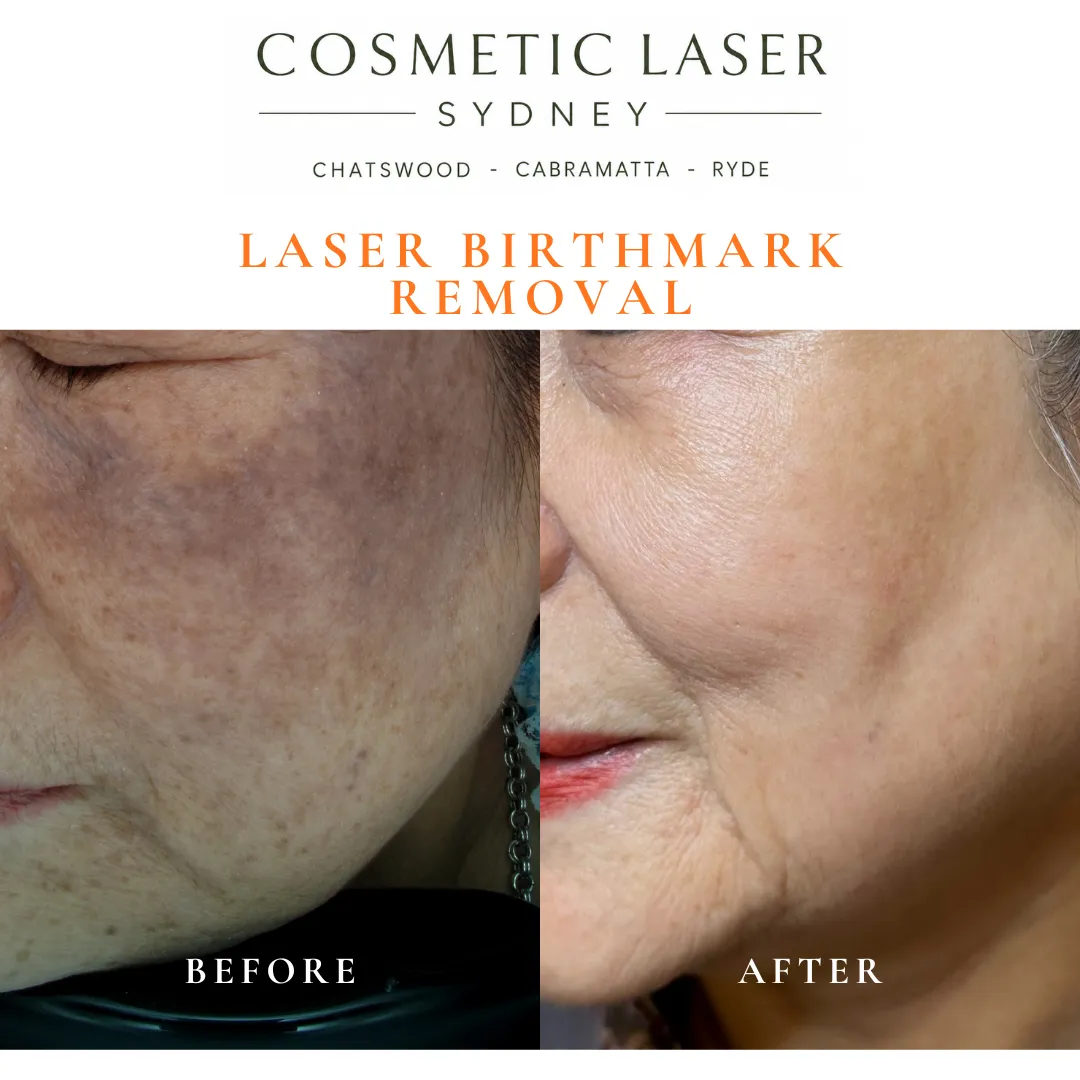
This patient had a large Nevus of Ota involving almost the entire side of the face. Nevus of Ota is a congenital pigmentation birthmark caused by pigment cells located deep within the skin.
Although she had the birthmark since birth, she decided to undergo treatment at the age of 70. Because the pigment is located deeply in the dermis, treatment can be challenging and usually requires multiple laser sessions for gradual clearing.
In this case, the patient required 16 laser treatments to achieve significant improvement. After each treatment, there is typically around one week of downtime, which may include temporary bruising, swelling, and redness.
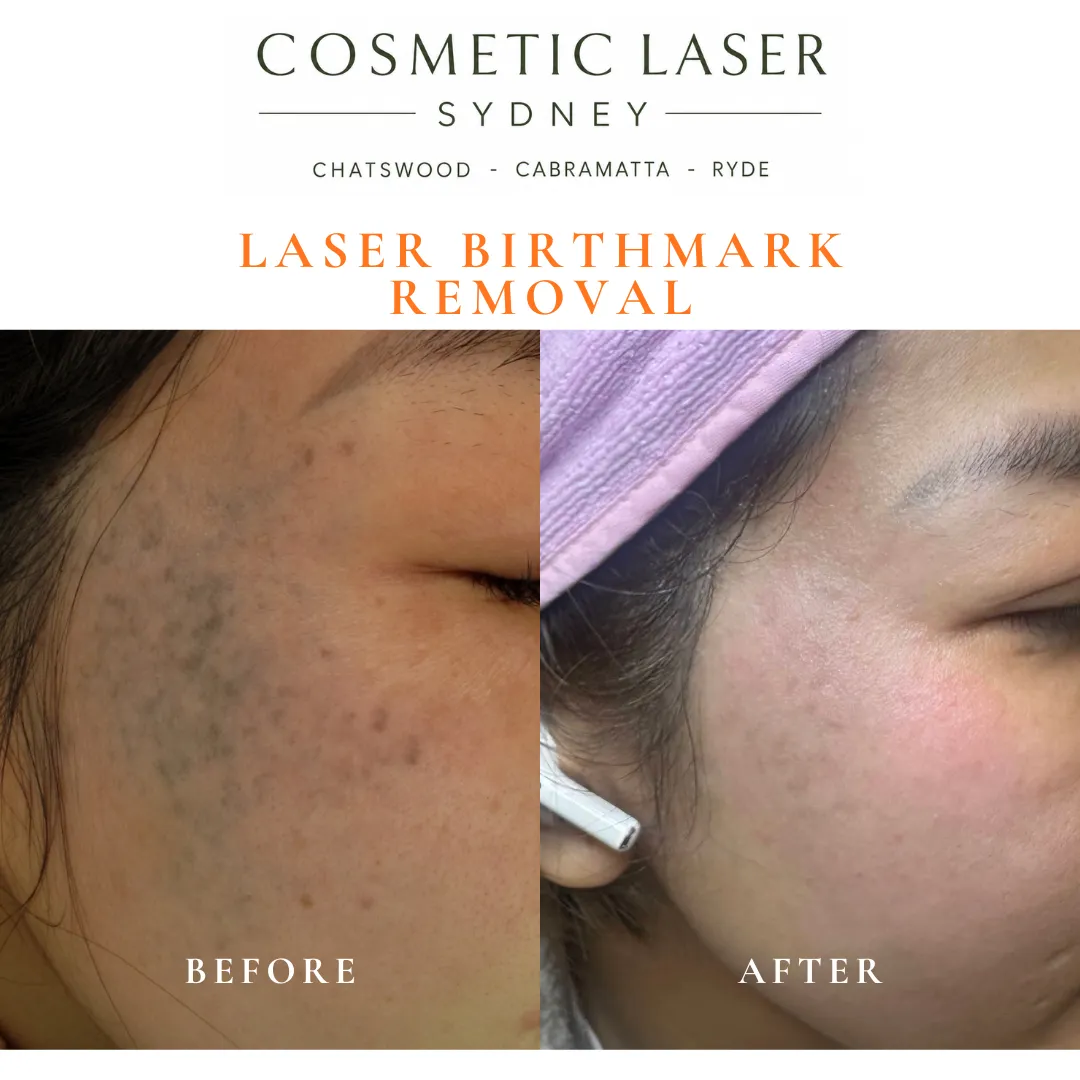
This patient had a large Nevus of Ota involving a substantial portion of the face. Nevus of Ota is a congenital pigmentation birthmark caused by pigment cells located deep within the skin. It typically presents as a bluish-grey or brown discolouration, as seen in this case.
Although she had the birthmark since birth, she decided to undergo treatment at the age of 40. Because the pigment is located deep within the dermis, treatment can be challenging and often requires multiple laser sessions for gradual clearing. In this case, the patient underwent 12 laser treatments to achieve significant improvement.
As with all laser treatments for deep dermal pigmentation, there is a risk of hypopigmentation (lightening of the skin) and mild textural scarring. Subtle hypopigmentation and minor textural change can be seen on close inspection of the after photo.
After each treatment, there is typically around one week of downtime, which may include temporary bruising, swelling, and redness. This patient had relatively thin skin and experienced more noticeable bruising following treatment.
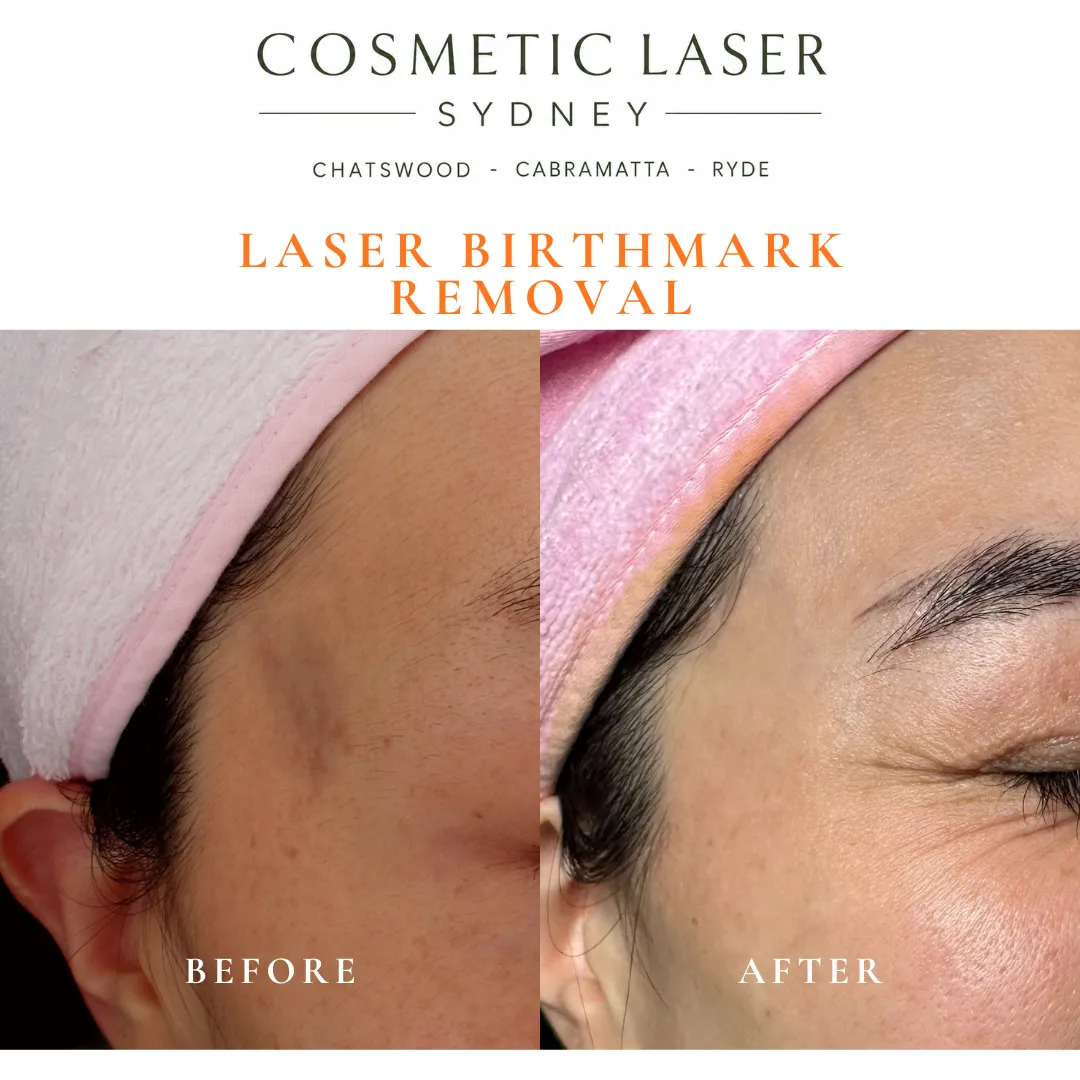
This patient had an isolated café-au-lait patch on the temple. A café-au-lait patch is a type of birthmark that appears as a light coffee-coloured area of pigmentation, which is where the name originates from. “Café-au-lait” is French for “coffee with milk.”
Unlike Nevus of Ota, the pigment in café-au-lait patches is usually located more superficially in the skin, making them generally easier to treat. However, multiple laser sessions are still usually required for gradual and safe pigment reduction. In this case, approximately 6–8 treatment sessions were required.
The patient also had numerous freckles, which were treated at the same time during the laser sessions. After laser treatment, temporary bruising, swelling, and redness are common and typically last for about one week.
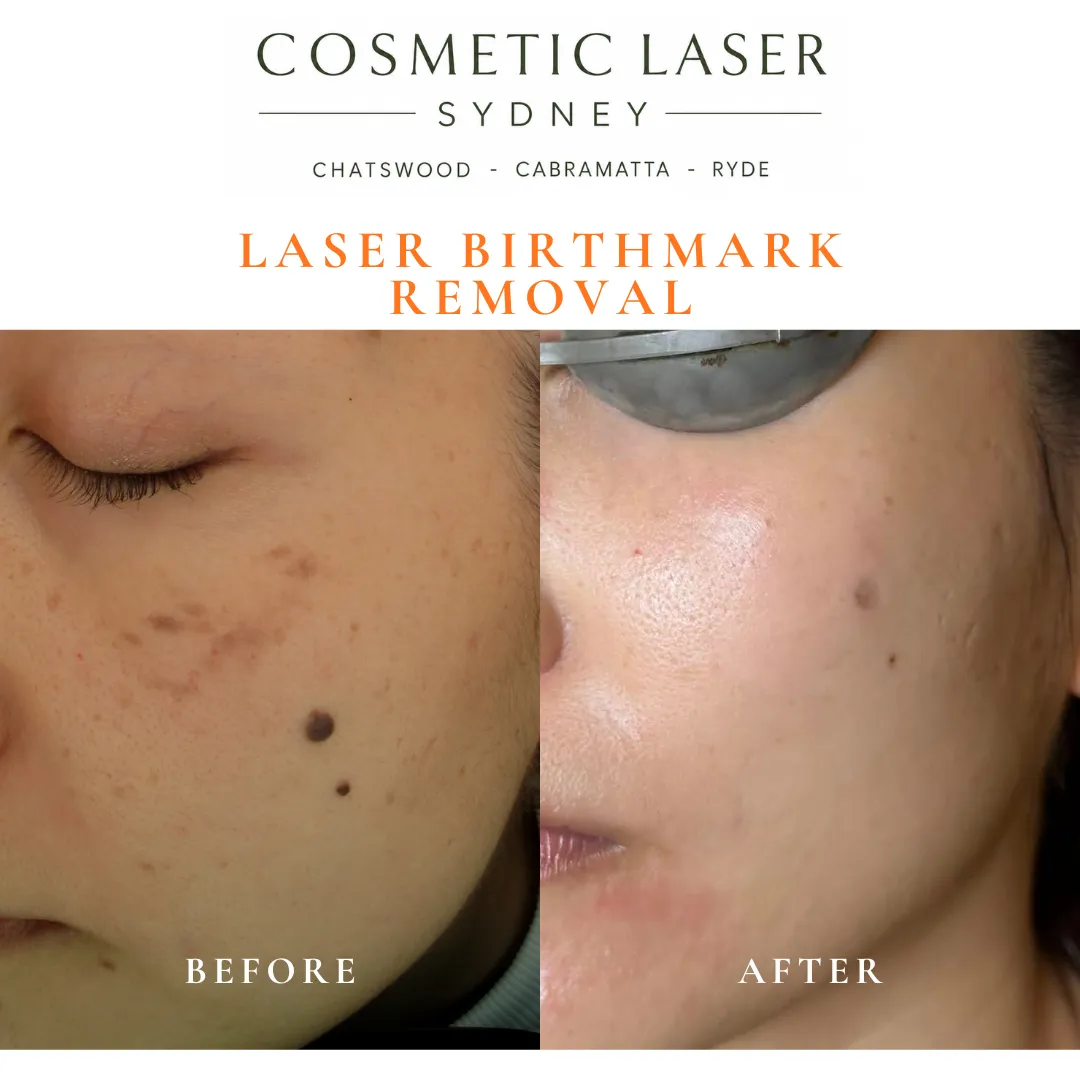
This patient had acquired bilateral Nevus of Ota-like macules (ABNOM), also known as Hori’s naevus. Unlike a true Nevus of Ota, this is not a congenital birthmark and usually develops later in life, particularly after the teenage years. It is more commonly seen in Asian patients.
It is called an “acquired” Nevus of Ota-like lesion because it resembles a Nevus of Ota in appearance, but develops later rather than being present from birth. The pigmentation cells are located deep within the dermis at a similar depth to Nevus of Ota, which makes treatment more challenging than superficial pigmentation conditions such as freckles or café-au-lait patches.
This patient required 8 laser treatment sessions to achieve significant improvement. Because the pigment is located deeply within the skin, temporary bruising, swelling, and redness are common after each treatment session.
These are real patient cases involving laser birthmark treatment performed by Dr Peter Kim in our clinic. These cases are presented for educational purposes only and are not intended to be promotional. Individual clinical circumstances, management decisions, and outcomes may vary.
Nevus of Ota is a congenital birthmark caused by pigment cells located deep within the skin.
It often appears as blue-grey or brown pigmentation involving the face and around the eye.
Because the pigment is located deep within the dermis, treatment usually requires multiple laser sessions.
Café-au-lait patches are light brown birthmarks that often respond better to treatment because the pigment is located more superficially within the skin.
Several treatment sessions are usually required.
ABNOM is a common pigmentation disorder seen particularly in Asian patients.
Although not present at birth, it behaves similarly to Nevus of Ota and often requires multiple treatment sessions.
These pigmented birthmarks are present at birth and vary considerably in size and depth.
Laser treatment may help lighten the pigmentation and improve cosmetic appearance, particularly when surgical removal is not practical.
Birthmark treatment is highly operator-dependent.
Successful treatment requires:
Different birthmarks respond very differently to treatment.
Some lesions may improve after only a few treatments, while others require long-term staged treatment over many months.
Dr Peter Kim has over 20 years of experience treating both superficial and deep pigmentation disorders.
Asian and ethnic skin types often contain higher levels of melanin and may be more prone to pigmentation changes following laser treatment.
Many of the birthmarks we treat, including Nevus of Ota and ABNOM, are particularly common in Asian patients.
Dr Peter Kim has extensive experience treating Asian and ethnic skin and carefully adjusts treatment settings according to skin type and lesion characteristics.
The number of treatments depends on:
As a general guide:
A personalised treatment plan will be discussed during consultation.
Most patients experience:
Recovery usually takes approximately one week following each treatment.
Healing time varies depending on the type of birthmark and the treatment intensity required.
Not all birthmarks can be completely removed.
The goal of treatment is often to:
Many patients achieve significant improvement, but complete clearance cannot always be guaranteed.
Our focus is on achieving the greatest possible improvement while maintaining patient safety and realistic expectations.
Laser treatment is generally very safe when performed by an experienced doctor.
Potential risks include:
These risks vary according to the lesion type and treatment depth.
No.
Some birthmarks can be significantly improved, while others can only be partially lightened.
The expected outcome depends on the type and depth of the birthmark.
Most patients tolerate treatment well. Topical anaesthetic or local anaesthetic may be used when appropriate.
Most patients experience approximately one week of redness, swelling or bruising following treatment.
Improvement is usually long-lasting once pigment is successfully removed, although some birthmarks may require additional treatment over time.
All consultations and treatments are personally performed by Dr Peter Kim.
Treatment costs vary according to: A personalised quotation is provided during consultation.
Standard consultation: $105 (Medicare rebate approximately $50). Long consultation: $150 (Medicare rebate approximately $90). If you proceed with laser treatment on the same day, the consultation fee is bulk billed (with Medicare).
Please note that Medicare rebates do not apply to cosmetic laser treatments.
To arrange a consultation, please contact the clinic:
Phone: (02) 9411 4880 | SMS: 0433 284 880
Locations: Chatswood (4/9 Railway Street) & Cabramatta (227 Railway Parade)
Opening hours: Wednesday to Saturday | 9:00am – 5:00pm
All treatments are personally performed by Dr Peter Kim.
Call us on 9411 4880
Chatswood & Cabramatta